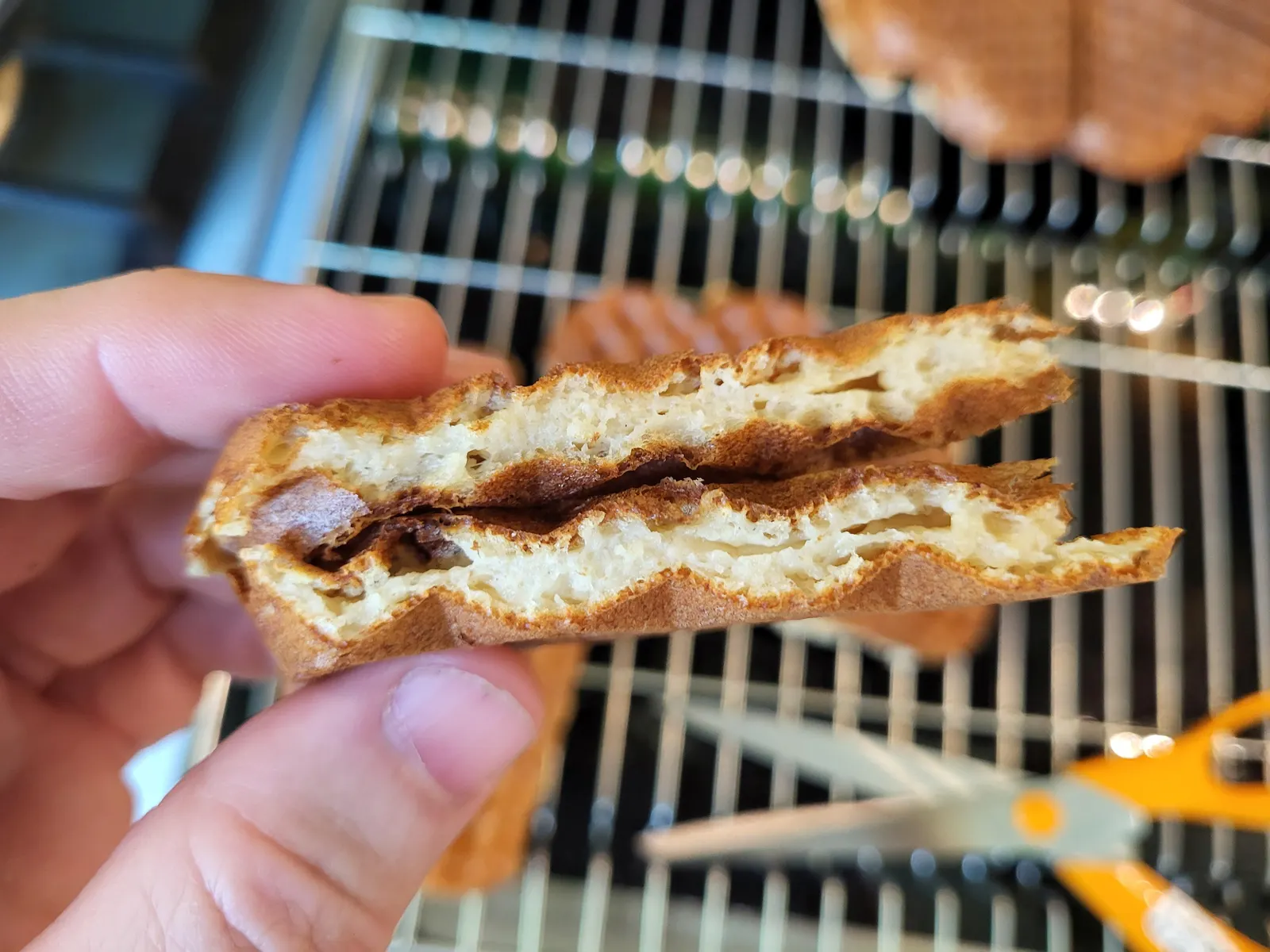
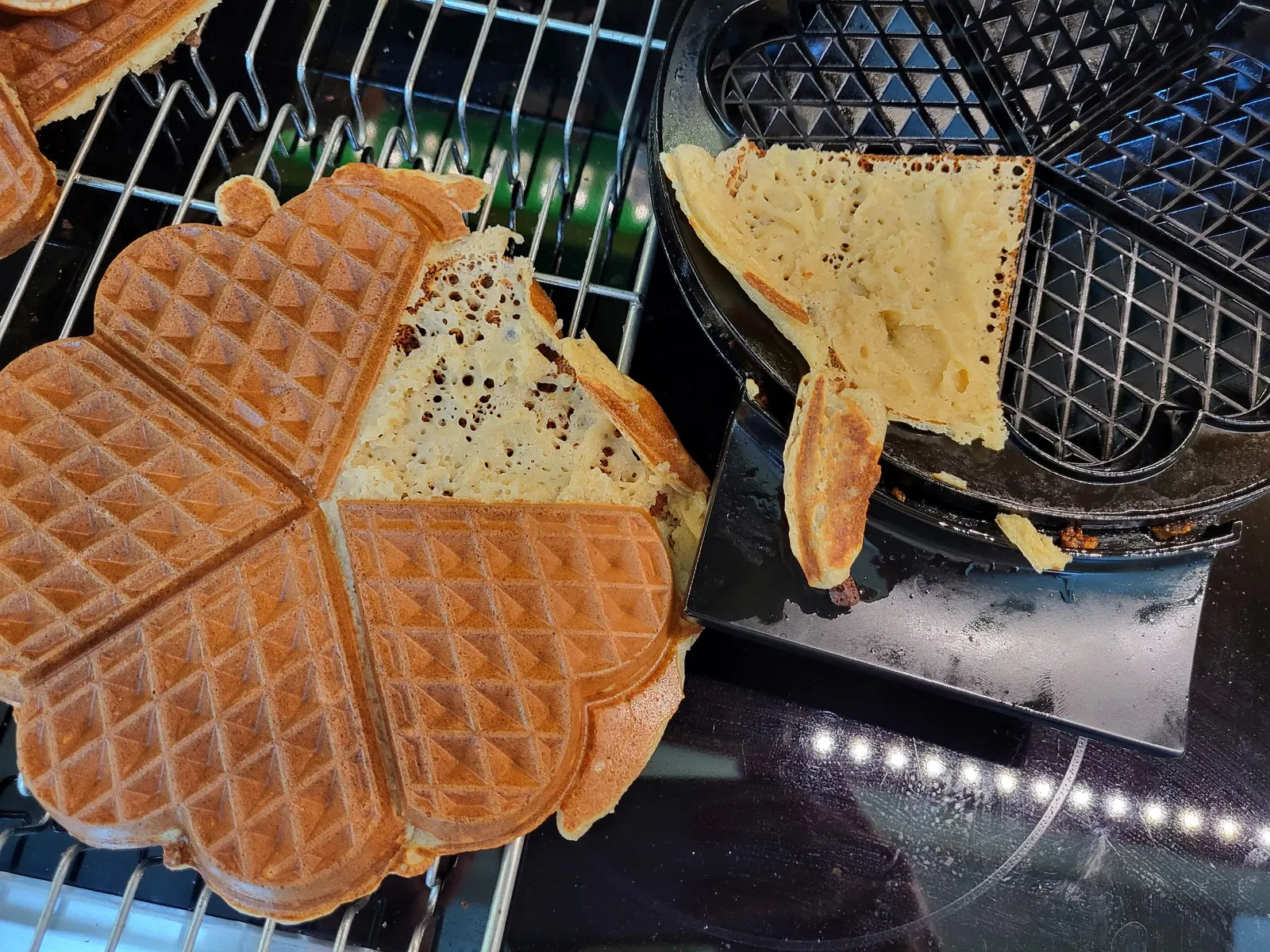
Gluten free waffles with oats
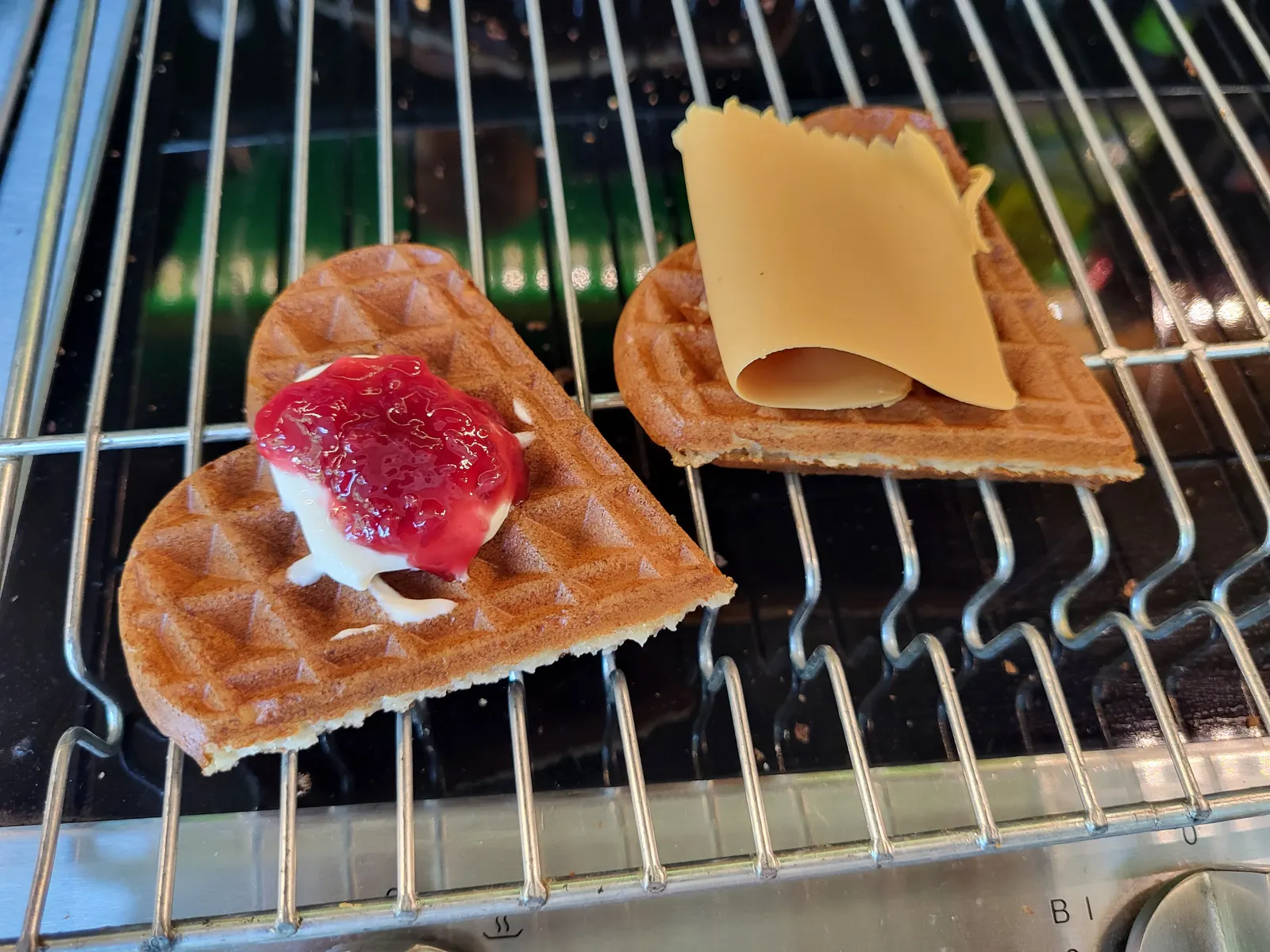
Oats are a perfect base for gluten free waffles. This recipe is built on whole oats, with the batter made straight in a blender. Combined with a little corn starch they take on a texture close to that of a "normal" Scandinavian waffle - perfect to eat alone, with some brown cheese or a dollop of sour cream and raspberry jam.
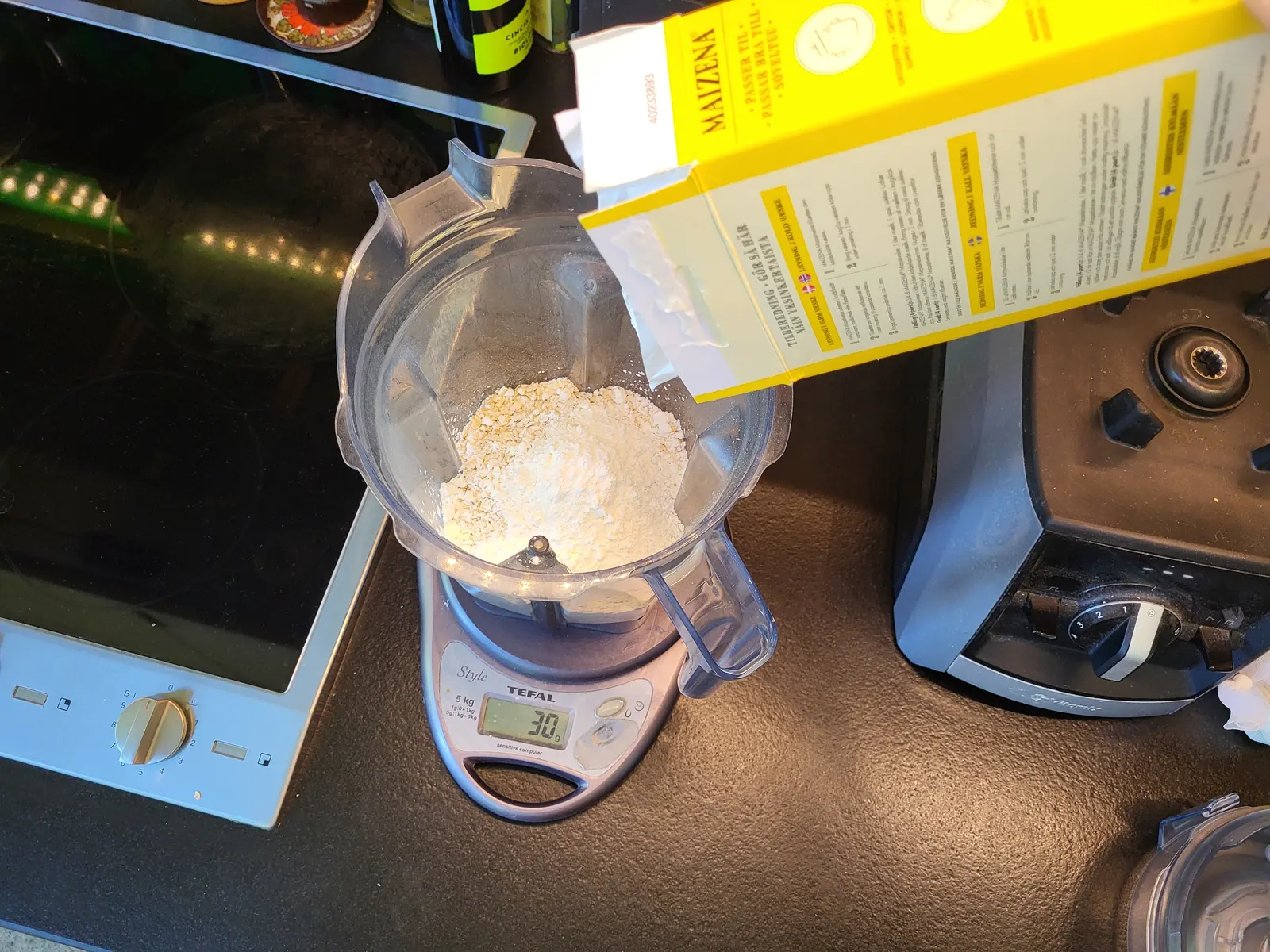
| Ingredients | Composition | Baker's % | ||
|---|---|---|---|---|
| Ingredients | Amount | Amount | % of batter | Baker's % |
| oats | 270 g | 22% | 86% | |
| sugar | 44 g | 4% | 14% | |
| corn starch | 42 g | 3% | 14% | |
| baking powder | 1 T | 9 g | 0.8% | 3% |
| vanilla sugar | 1½ t | 6 g | 0.5% | 2% |
| cardamom | ½ t | 1.5 g | 0.1% | 0.4% |
| milk (3.5%) | 650 g | 52% | 208% | |
| egg | 3 | 160 g | 13% | 52% |
| oil | 70 g | 5% | 22% | |
| Total | 1,249 g | (approx. 10 waffles) | ||
Method
Avogadro's automatic instruction: Combine the dry ingredients, then stir in the liquids until smooth. Add oil last.
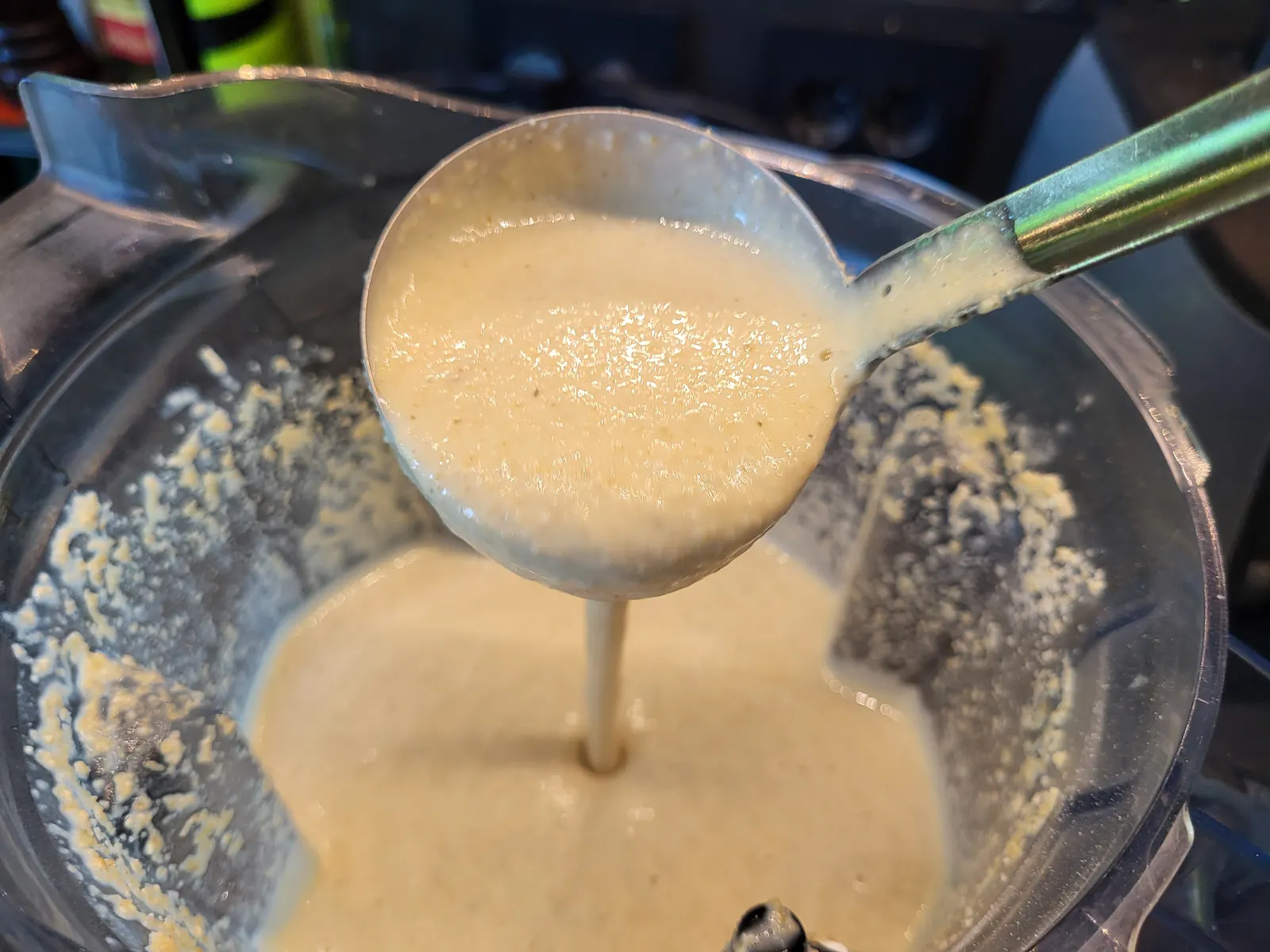
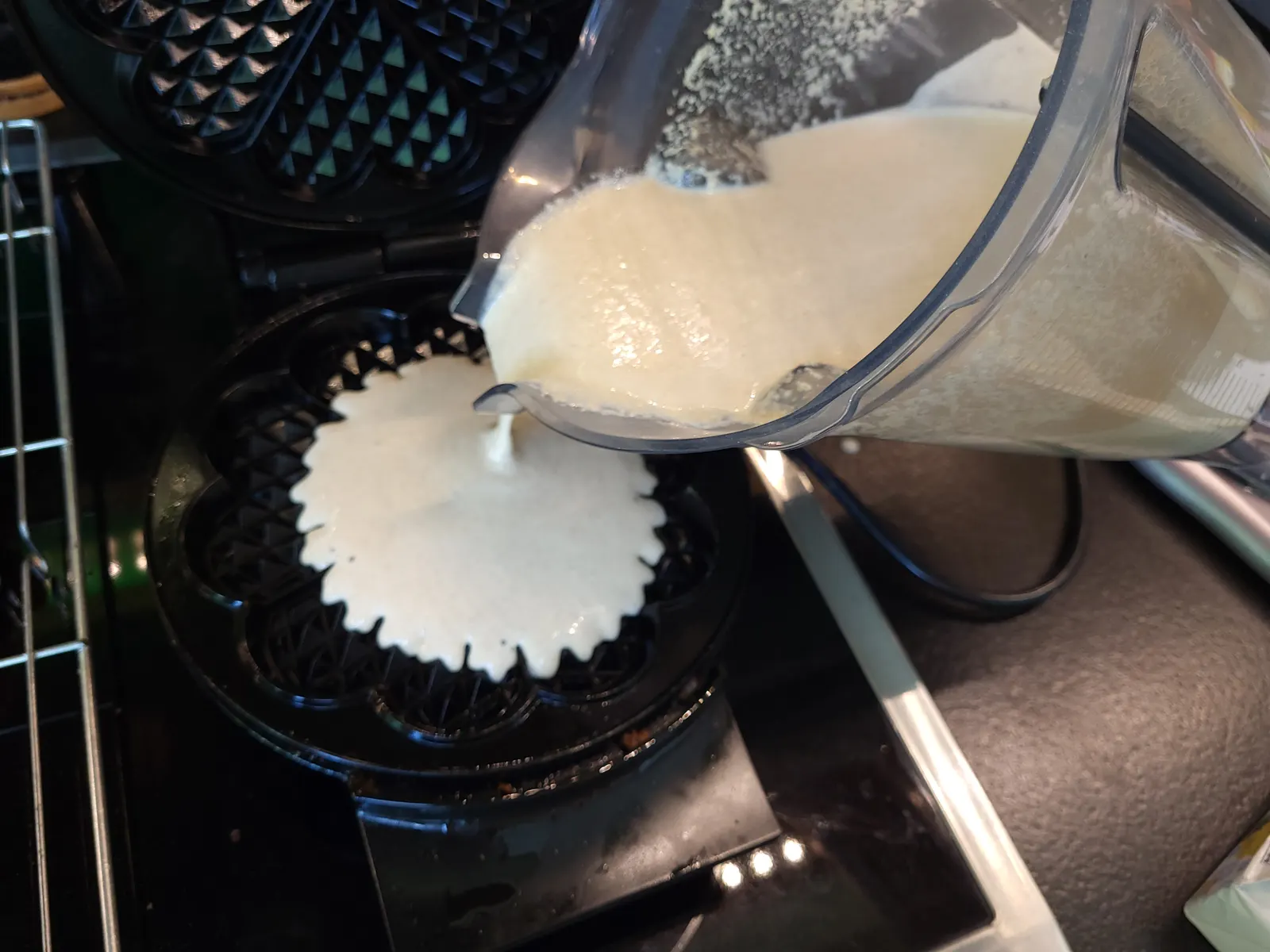
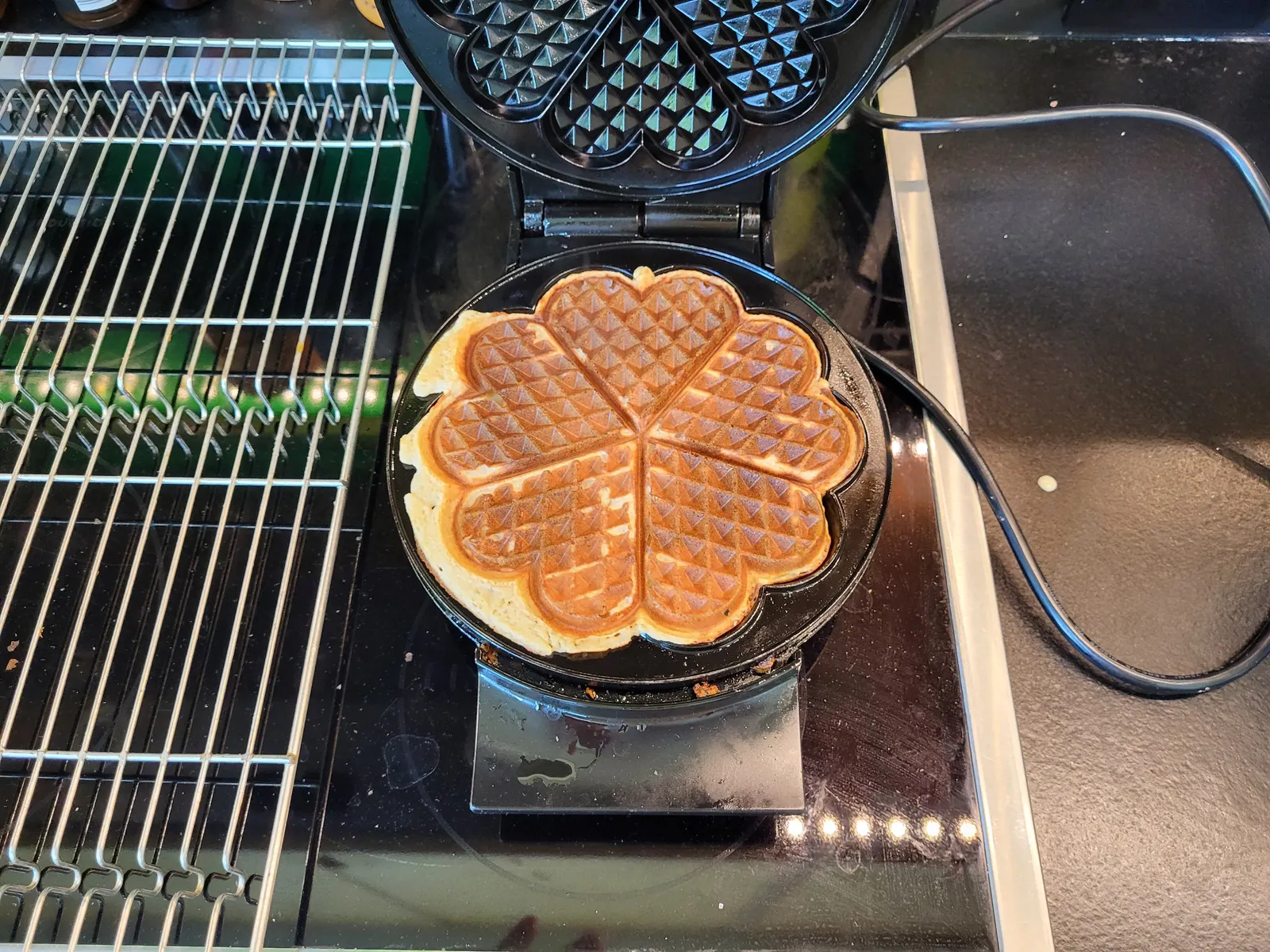
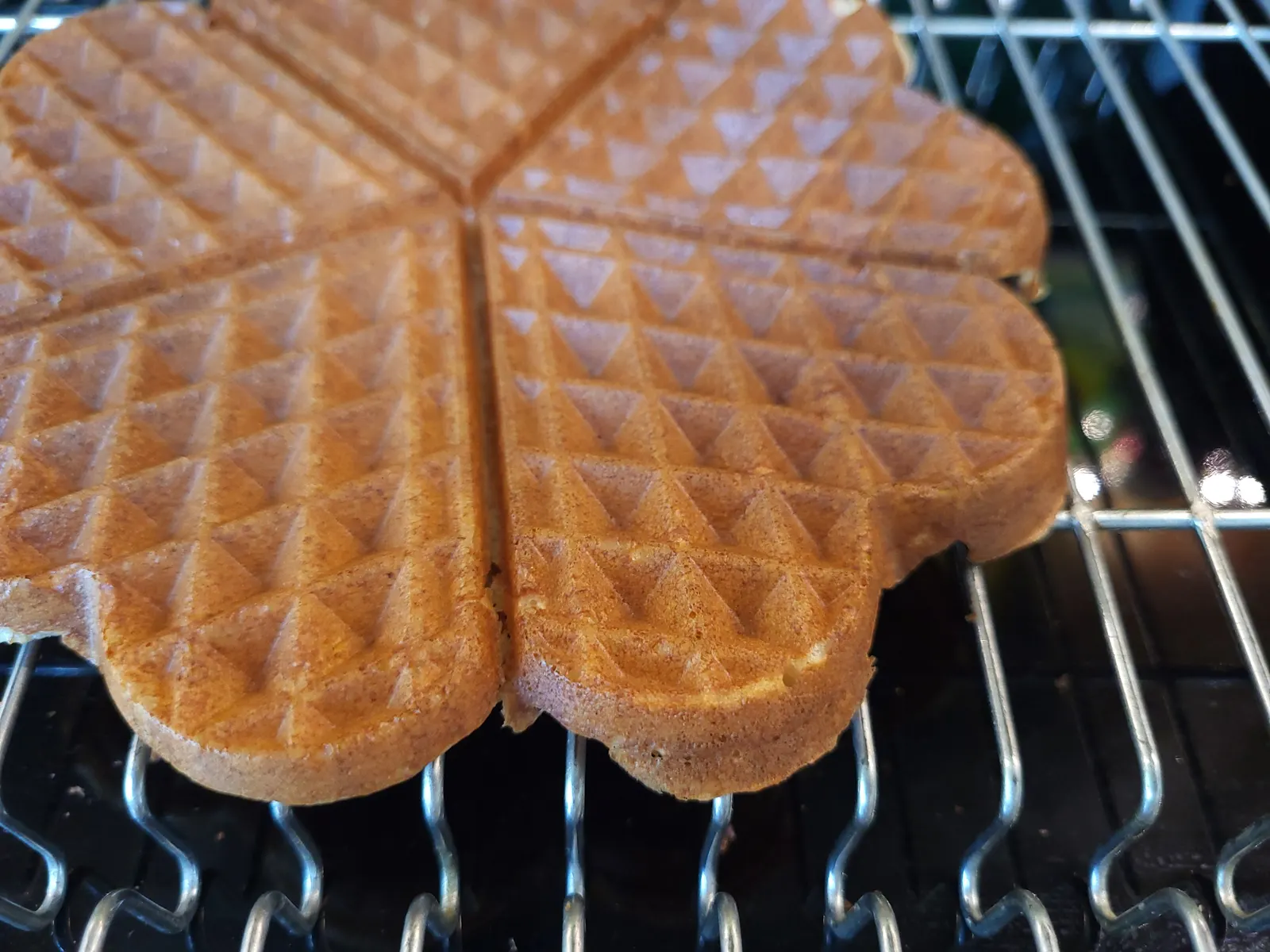
Comment: The batter was left to hydrate for 20 minutes before adding oil. This is important to give the oats sufficient time to thicken the batter. The waffle was baked in a single-waffle Norwegian/Scandinavian style 1000 watt waffle iron with a non-stick coating. The iron was only greased prior to the first waffle. Batter per waffle: 110 g. Waffle after baking: 85-90 g. This is a little less than usual, resulting in a light waffle.
What it is like
Texture
- Soft and moist
- Soft, slightly crisp
- Crisp outside, soft inside
- Crisp, slightly soft
- Crisp and airy
Sweetness
NeutralVery sweet
This batter is sweeter than 60% of the waffle recipes in the Avogadro corpus. Computed from the sugar in the batter - a statement about the composition, not a tasting note.
Baking
- Released cleanly
- Needed a nudge
- Stuck a bit, but came out whole
- Stuck fast and tore
- Had to be scraped off
The waffle heart says
This is a typical waffle batter that is very likely to yield a good result. Enjoy your waffle!
The waffle heart: The filled cells show how close the waffle is to an average waffle. When all 9 cells (3×3) are filled it can be called a typical waffle. The fewer cells filled, the more unusual the waffle. Note that some of the commercial waffle mixes are a little unusual - some are very sweet, for example. Several gluten-free waffles are also a little unusual.
The two wings on the waffle heart show whether it can be called a waffle batter or not. If the wings are filled, all is well. If the wings are white, it's wise to adjust a little more to make sure the result turns out well.
If the whole heart is empty, nothing is wrong - there is just not enough here to judge yet. A batter needs at least flour, liquid and something fatty.
Standard mode helps you keep the heart filled (8-9 cells). In expert mode you are free to experiment.